• FBTimeline_SunsetWaterrockKnobNC_LanceWarley_851x315

    After 8 years of building up NWF’s social communities, I have decided to leave to help run the social entities at U.S. Fish and Wildlife Service. I wanted to share with my beloved online friends what I shared with my colleagues at National Wildlife Federation– as much of the words ring true for the people I worked with while I was there.
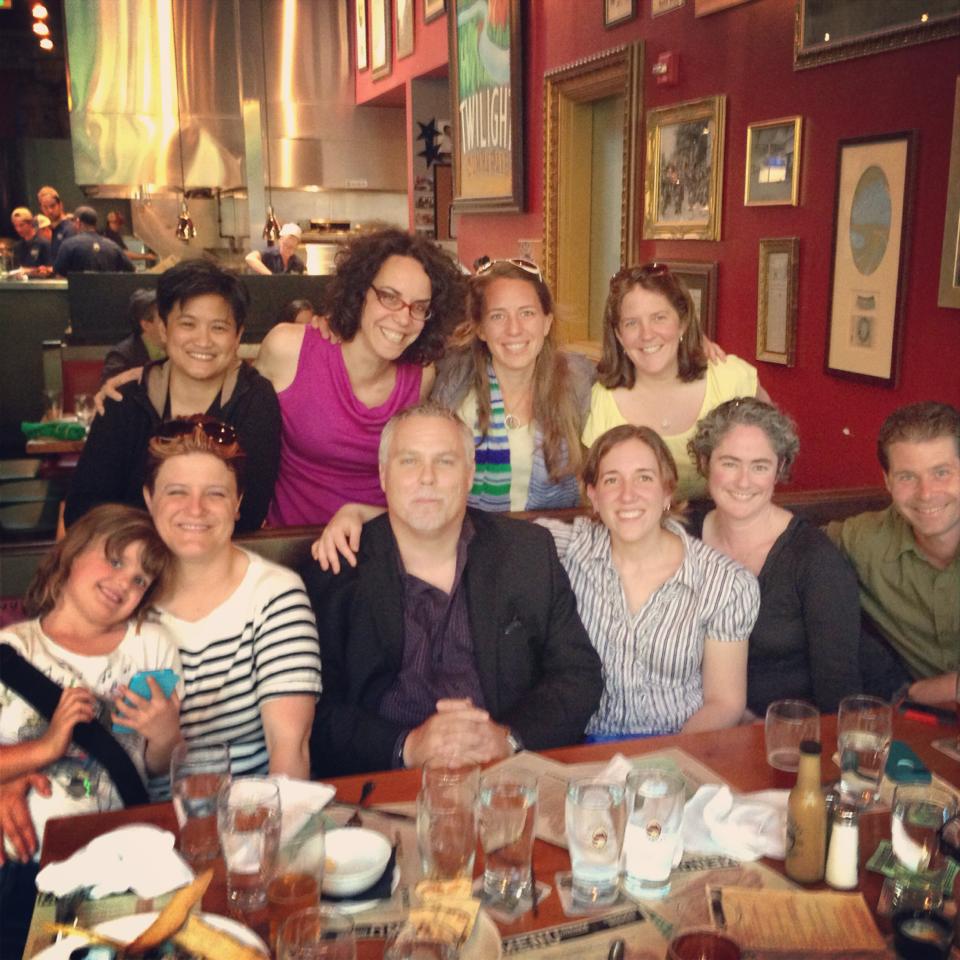
    NWF Social Media Update Q2 2013So, to all of my nonprofit techies and counterparts, to the incredible coalitions, partners and groups I’ve had the pleasure to work with, and for the absolutely amazing and inspiring group of NWF supporters I’ve gotten to know over the years, please read these words and know how grateful I am. I will continue to pledge to do the best work I can for both the communities and wildlife.

    Thank you all for being wonderful to work with for wildlife.. I’m looking forward to working hard at USFWS to make a difference.

    ======================

    To My Dearest NWF Family,

    I gave serious consideration to writing a “goodbye tweet” instead of email, but the truth is, I have loved this place for so long that 140 characters isn’t going to cut it.

    My last day at NWF will officially be October 29th. That being said, I will continue being an avid fan and NWF supporter in my personal life until the end of my days.

    The truth is, working for NWF had always been my dream job since childhood and I’m incredibly honored and humbled by what I was able to accomplish while I was here, with the help of all of you. We’ve made impressive strides blending fun content, our mission and the passion of people online to see real results and learn valuable lessons. I’ve learned so much about each facet of how we do business here thanks to the 14 bosses, 4 departments and 6 job descriptions I’ve had since I started back in 2006. I look forward to following the future growth of NWF and hope to work with all of you at some point in the future.

    I’m not going far. Starting November 3rd, I will be working at the US Fish and Wildlife Service.

    I thought it only appropriate that I write a blog for you all about what I loved about this place and what I will miss.

    5 Reasons I’m Thankful for the National Wildlife Federation

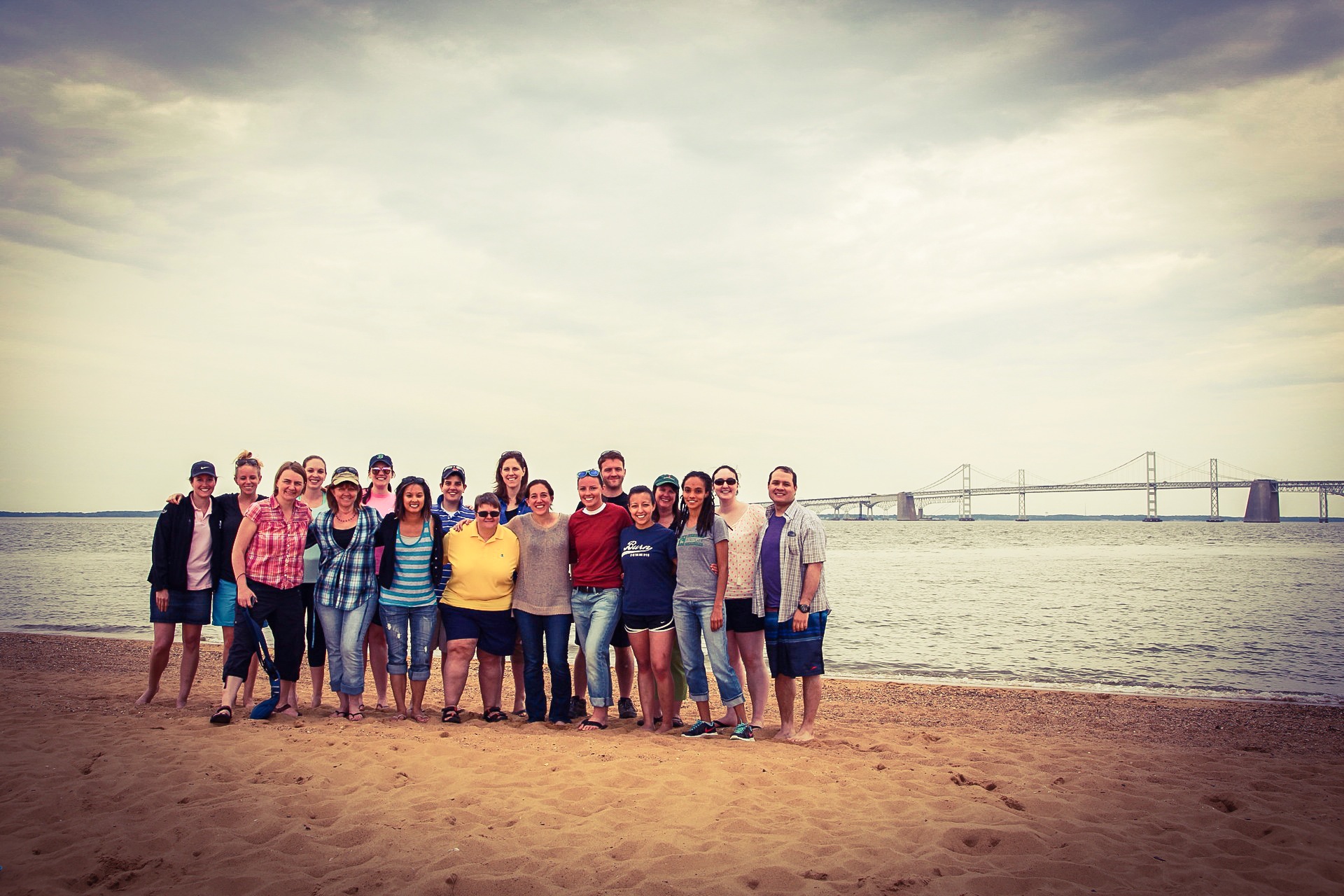
    1. The People: You are the smartest, most talented and hilarious colleagues a person could ask for. I have always loved wildlife, but it’s impossible to work for NWF and not love the people too. You all do incredible work and should feel validated daily by the strides you are making for wildlife. The amount of work people do in this organization is astounding and you should be proud of that. I feel so fortunate I got to work with everyone from regional staff, affiliates, partners, board members and more to figure out how we all could use social media for wildlife. I loved that the online world reminded us that we weren’t so far apart after all.
    IMG_5980

    2. The Incredible Office BuildingHQ

    The HQ building served as a constant reminder why I work here and not some for-profit muckity muck :). It was behind our building I spotted my first pileated woodpecker cavity nest, noticed dwarf ginseng in impressive numbers and spent hours observing for wood frogs, box turtles and various snake species (I’ve seen 6) as I thought through our social strategy and how to bring offline-online. I took walks with Craig Tufts and spent time investigating trees and noticing nuances during various check-ins or after rigorous meetings. This building has been a source of inspiration and a great reminder as to why we have to create a space for wildlife in every day life to be happy.

    3. You Let Me Try Out New Ideas – My job as a social media nutcase got grounding back in 2006 when Kristin Johnson gave me control over our Myspace page with 25 friends. The rest is history— we are now well over 1 million fans and followers across platforms. It takes an amazing organization to accommodate a change in the way NWF did for someone like me. It is because of this our work is mentioned in dozens of books and hundreds of articles around our leadership in social media. As many of you know, I present about 25 times a year about using social media and NWF was always incredibly supportive and a true thought leader amongst nonprofits in this realm. I am impressed with any place that adjusts to changing times. I will certainly miss how innovative this place is!

    DSC_4282

    4. I Got To Make Friends for a Living – This one is pretty self-explanatory, but one of the best social media concepts I learned while at NWF is to treat social media supporters just like your friends. That means- banish the use of the phrase “PUSH IT OUT” and think of connecting with people on social media as making new friends. My job at NWF taught me how to never forget that real people are behind social media handles and that if you treat them with respect and communicate with them in ways they want to be talked to— you can empower so many.

    5. The Mission: All for Wildlife – I’m so grateful I got to communicate on wildlife issues in funny ways, serious ways, and informational ways, all while experimenting and working with our programs and initiatives to introduce our work to our online supporters. We were constantly working to make our work more relevant and approachable. I am so honored I got to hold a position where I had an excuse to talk about amazing wildlife and ecosystems.

    You all are in fantastic hands with Dani Tinker when it comes to social media as she’s been an astounding help when it comes to community engagement and content creation. I’ll be around through the end of the month so please reach out if you need anything. Looking forward to staying in touch.
    Double Dare-1

    All for Wildlife,
    Danielle

    =============

    I promise to stay goofy despite this change. 🙂

    JboyeSocialSites

  • National Wildlife Week is one of NWF’s oldest programs and one of my all time favorites to track. The history of National Wildlife Week is rich and geared heavily toward providing materials for schools and educators to celebrate different wildlife species. It makes for an excellent program for social media and every year I find fun ways to track the reach and engagement. This year– I compiled a few ways I tracked hashtags across platforms. Do you use additional programs? Let me know!

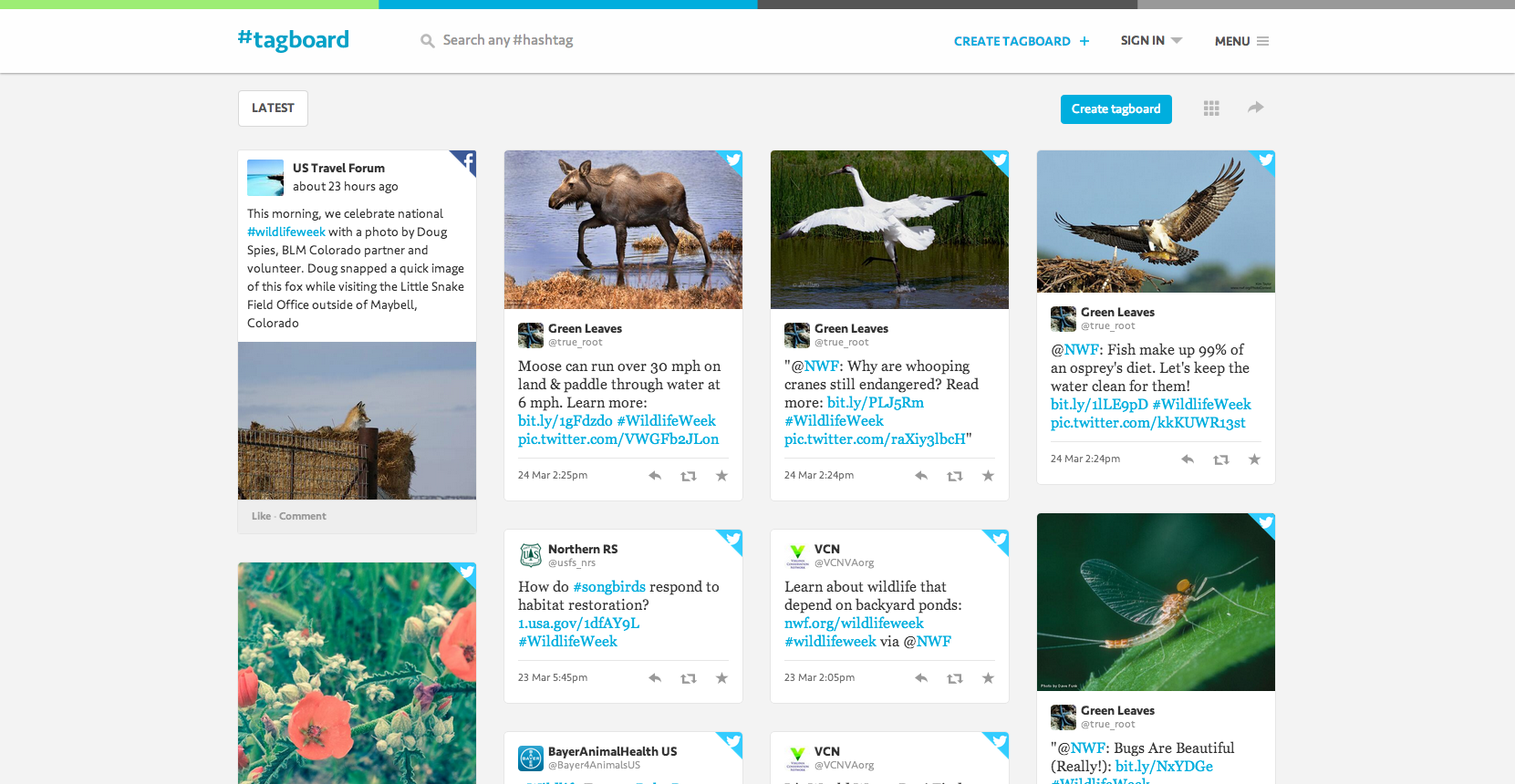
    1) Tagboard

    Tagboard tracks mentions of hashtags across Facebook, Instagram, Twitter, Google+, Vine and App.net. It pulls all of the mentions into one place and allows you to even title the hashtag if you create an account.
    #WildlifeWeek on Tagboard

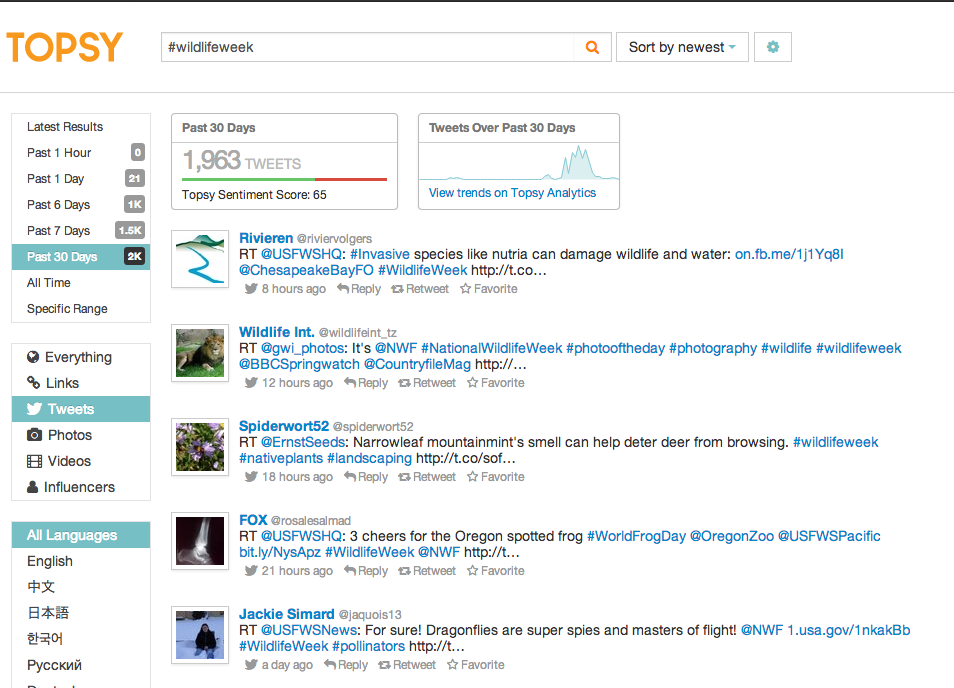
    2)Topsy (Both Analytics and Search)

    This tool has both pro and free versions and I highly recommend using the free version to do a search on how your hashtag is performing.

    TopsySearch

    I even compared #WildlifeWeek with #NationalWildlifeWeek to see how people used the hashtags.

    NWW Topsy

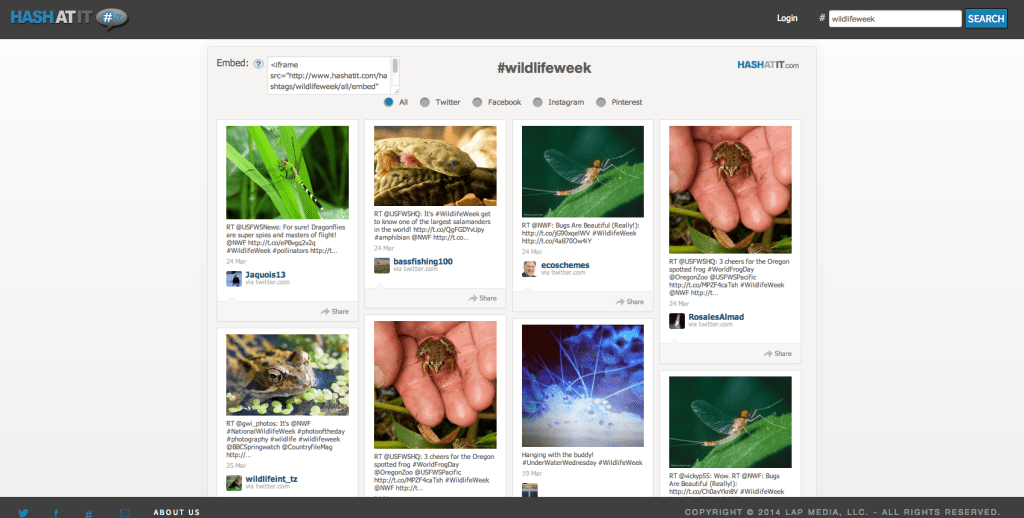
    3) HashAtIt

    This site shows the hashtag results for the Instagram, Twitter, Facebook and Pinterest.Hashatit.com   Hashtag Search


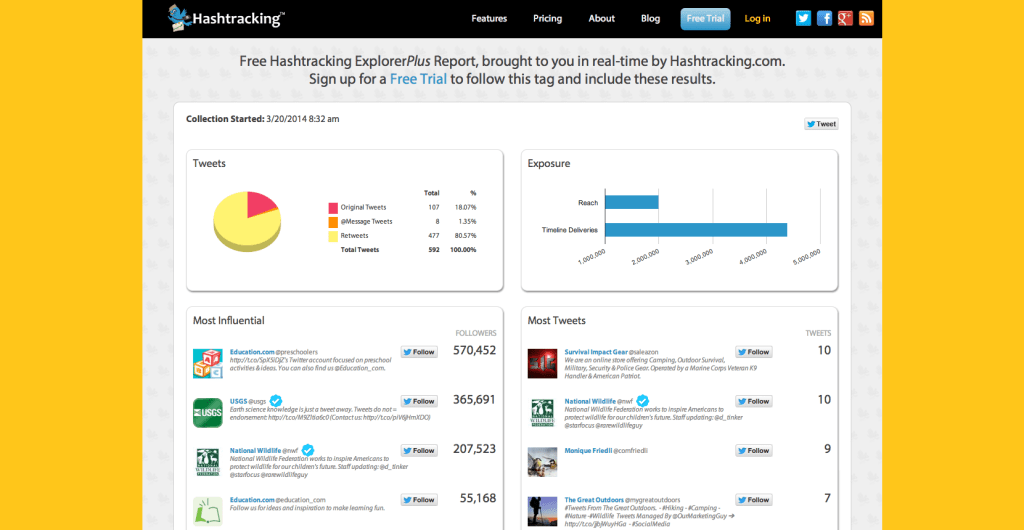
    4) Hashtracking

    This site allows for free trials so if you’re looking to test something out for tracking purposes it is a good place to start.

    5) Tweet Binder

    Tweet binder has a number of reports that generate when you use it. From contributor information to number of tweets– this is a very thorough tool for tracking hashtags.
    Tweetbinder-NWWInfluencers

    While I didn’t use them this time around- I have used and been happy with Rowfeeder, Mention.net and a number of other Twitter tracking tools- but this year I tracked with these five. What tools do you track your events with?

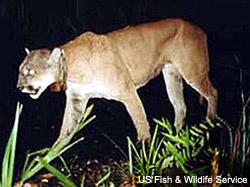
  • camerapanther

    Wearable technology is on the rise. I’ve read a number of articles discussing the growing importance of wearable tech with predictions such as  Why Wearable Tech Will Be As Big As the Smartphone”  as well as compilation posts that talk about tech advancements and trends in 2013 or 2014.  It amuses me and can’t help but notice how NOT NEW wearable tech is for wildlife.  It’s been a vital way (although rightfully questioned) that we’ve learned about a number of species since the mid 1960’s. By attaching a device that sends signals to a transmitter, we’ve been monitoring the behaviors of hundreds of species and learned a great deal from the research. There are few basic techniques that we employ to track wildlife. This particular post describes VHF radios in a very helpful manner. Perhaps with the advance of wearable technology we can make it less invasive to our wildlife tracking efforts.

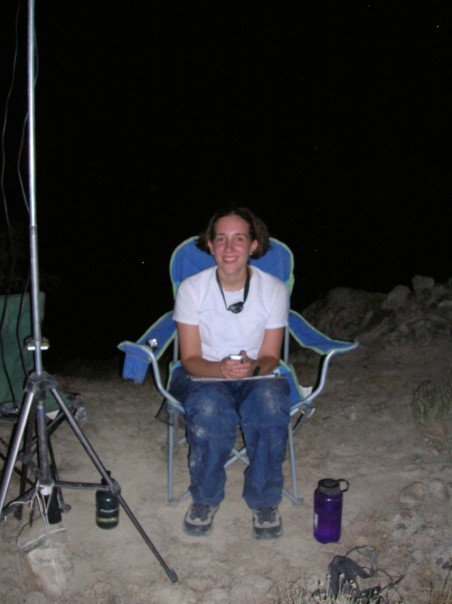
    A number of years ago, I was involved in a project that went about attaching “wearable tech” to Townsend’s big-eared bats and we used radio telemetry to  monitor their nightly behavior.  Luckily it doesn’t take this much technology to monitor the activity on my Nike sport’s watch, but you get the idea. Pictured below is the sweet set up I had to track activity on my radio transmitter.
    telemetry
    So just remember.
    Wearable technology is not new for wildlife. And thank goodness it isn’t.

    While I know the tech we force wildlife to wear isn’t as complex as the computers we’re strapping to ourselves, you know what I’m talking about. It’s funny.

  • Jug Bay Wetlands Restoration deals with restoring the presence of wild rice.
    At Jug Bay Wetlands they have worked to restore the presence of wild rice. We can learn so much from wetland restoration planning tactics listed below.

    As I’m growing as a naturalist, it’s surprising to me how much of the subject matter deals directly with my work as a communicator for the National Wildlife Federation. In my Wetlands Ecosystems class we went over restoration techniques that truly could offer help for those trying to tackle their social media or communications strategy (in ways you wouldn’t expect).

    So– next time you’re planning a project of any kind– I highly recommend checking out the below process and substituting the land management terminology with whatever marketing vocabulary you see working here. I think it’s a helpful reminder of how we lay out projects and goals to achieve a greater mission.

    =================================

    1. Planning
    A. Evaluation of the trends and needs of the whole system

    1. Status of the resources
    2. Historic conditions, so you can determine the rates of loss
    3. Define the ecological needs and critical functions
    4. Define the human uses/needs, both social and economic

    B. Establish restoration priorities for the whole watershed/estuary and develop goals (Include multiple stakeholders)

    C. Develop a framework for implementation that all conducting restoration work agree to follow

    2. Project Development
    A. Set clear goals for the project that link to regional planning
    B. Determine the technology or approach that is most appropriate for the goal and the site
    C. Design monitoring that allows you to:

    1. Determine progress of goal
    2. Practice adaptive management (allows midproject corrections)
    3. Export lessons learned- both positive and negative
    4. Contribute to the system-wide monitoring

    D. Leverage resources to maximize benefits, including coordinating your project with others that are in the area.

    ====================

    It’s amazing how much this document can apply to planning outside of the restoration sphere. I love the emphasis it places on monitoring and adjusting as you go. So much of the success you have when planning social media (or any project for that matter) comes from coordination as well as considering the whole ecosystem.

  • five-lined skink
    You Five-lined Skink (you’re definitely not as cool as this skink)

    The common names we have bestowed on some animals do not do them justice. To start – I’m disappointed by how many of our names for animals are iterative. Take the genius additions of lionfish, dogfish, batfish or even catfish —  by the time we were naming fish were we even trying? And then there are the names that can double as clever insults. In fact, @d_tinker and I used to call one another many of the examples I’ve listed below using #wildlifeinsults as the hashtag. And that is actually what inspired this blog post. The names I’ve included below will not only introduce you to awesome new wildlife you should know more about– but it will also expand your insult vocabulary. These names are only to be used for playful and funny reasons. I don’t encourage insulting people with the names of awesome animals in any real capacity– for fear it will make them dislike animals. Instead– perhaps we’re introducing you to your new spirit animal.

    Animal Inspired Insults

    Five-lined Skink
    Hagfish
    Hoary Bat
    Dikdik
    Bufflehead
    Kakapo
    Snot Otter
    Crappie
    African Wild Ass
    Cockle (bivalve)
    Chubsucker
    Carpet Shark
    Bighead Carp
    Stinking Corpse Lily
    Slimy Salamander
    Hairy Beardtongue
    Bushtit
    Ash-breasted Tit-tyrant
    Dhole
    Yellow-bellied Sapsucker
    Markhor
    Snub-nosed Monkey
    Evergreen bagworm
    Showy Lady’s Slipper
    Fangtooth
    Bony-eared assfish

    I’m collecting more…any ideas? I’ll keep adding them. 
    Insult people with classy wildlife names and your IQ will soar. 

  • I’m often asked why we have such a large audience on Google+ or where it fits in NWF’s social strategy. Here’s a recent powerpoint I did that may help explain some of it!

  •  


    1. Starting a tweet with a reply.

    No – “@johnhaydon has compiled a great list of Twitter resources [link] ”
    Yes –“Great list of Twitter resources by @johnhaydon [link]!

    While it’s always great to mention someone in your tweet- if you do this you will only be updating the people who follow both of you. This was a feature that was meant to reduce tweets in the feed, but it’s one that users overlook all the time.

    If you must put a username early on in the tweet many people put a period in front to avoid this.

    2. Your tweet is too long.

    I don’t need to go into this one- but if you’re inspired to write up a bunch of tweets check the length of your tweet by opening twitter. If people can’t “quote” your tweet- it is probably too long.  If you’re really struggling with tweet length- use this calculator to see how many characters you have.

    3. Misusing or overusing hashtags

    Using TOO many hashtags is distracting and detracts from the message. Also- don’t do anything that breaks up the hashtag. We recently encountered this when we tried tweeting #hike&seek but the & actually broke up the tag. So remember, keep them simple and limited.

    4. Synching accounts but never interacting

    I’m all for time-saving tips and ways to be efficient on social media. But if you’re using Twitter as a broadcasting service think again. Twitter is best used for building relationships and learning of new and interesting things. If you’re not conversing on Twitter- I encourage you to do so. I would argue it’s my favorite network because of the types of conversations a tweet can lead to.

    As a lover of nature, why not learn about REAL bird tweets?
    Tweeting properly is a valuable skill to learn. But so is learning about real tweeting, bird calls. If you’re interested in identifying birds by their tweets, you may like this blog post.  Since birds call for a number of reasons- mating calls, warning calls, territorial, vocalizing location etc- it may be helpful to figure out what kind of twitter user you want to be and where to incorporate listening.

  • I think that nature photography is a gateway drug to a healthy wildlife watching addiction. With that hypothesis, I’ve been enjoying how many social media sites I frequent daily are now heavily populated with images (cough… Facebook, Google+, & Tumblr). You can’t go anywhere on those sites without bumping into a few words slapped on to a startling picture.

    For this reason, I’ve been keeping my eye on Instagram– mostly because this simple site has seen a growth in users and has a healthy number of compelling wildlife and nature photos. It’s a simple concept- upload your photo, add a filter, and share with your friends. I recently read an article that said 40% of brands were also on Instagram.

    Now that they’ve added Photo Maps, I’m intrigued by what this means for documenting experiences using Instagram and how this can enrich your experience when you visit the natural world.

    I haven’t created a profile for NWF, mostly because we get a lot of user submitted photos but don’t have a steady supply of the wildlife photos that would be most interesting to people. But I do see great examples of Instagram use, and I continue to be curious about the platform.

    Web versions of Instagram that let you search:


    1. Statigram
    2. Pinstagram
    3. Extragr.am
    4. instagrid.me
    5. instadashapp

    Recommended Searches for Wildlife Lovers
    (remember to tag photos with appropriate key words!)

    • #Nature -over 800.000 photos
    • #Wildlife – over 176,000 photos
    • #Naturelovers – over 84,000 photos
    • #Wildlifephotography – over 4,000 photos

    There are also awesome fun things to search like #skyporn, #macromonday, and many many more! So if you’re tagging photos with hashtags and you aren’t being descriptive– try and remember to be just that.

    Are you using Instagram? Let me know!

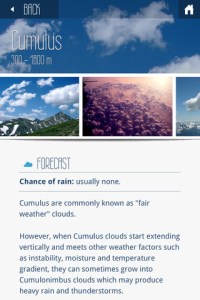
  • I’m no stranger to writing about mobile applications.  I think your mobile phone can serve as equal parts magnify glass and field guide when used properly. There’s something fascinating about discovering, documenting, and sharing an outdoor experience with handheld technology. Now you can even keep your head in the clouds (and know what types they are!)

    Last fall, I took a fascinating class through the Audubon Naturalist Society that focused on weather and climate. Needless to say I’ve been preoccupied with meteorology and looking at the sky ever since.  I care a lot more than I ever have about humidity and high and low pressure systems.

    For anyone who is a fan of clouds or sky gazing, this application could be an impressive addition to your nature apps collection for just $1.99. I am not one to gush about a product, but I admire the design and the content. It’s not like every other field guide app, it takes you on a visual cloud journey, and I appreciate that.

    Do you look at the clouds? What’s your favorite type? I like altocumulus.

  • Image

    So because of my science background, when I think pinning– I don’t necessarily imagine the site, Pinterest. I think of entomology class when I was instructed to capture, pin and label insects. But alas, pinning doesn’t have to mean clumsily sticking a pin through the mesothorax. I’m now associating it with a vibrant and visual bookmarking service most often recognized as being populated with women collecting sites about weddings, babies, recipes or baby recipes (just kidding…I do not condone baby eating) .

    Let’s just say, it’s much easier A Guide To Mounting Insects on Pinsto “pin” things online than the experience I had in college. Not to mention that nonprofits and businesses alike are finding real reasons to start using Pinterest.

    So what are you using Pinterest for?

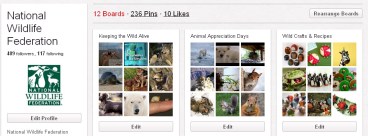
    I’m using it for the National Wildlife Federation because I’ve noticed how the interests of people online are becoming more and more visually inclined. You see how well images and pictures do on Facebook, well that translates nicely into Pinterest’s clean interface. Not to mention, in a very short time we saw a large increase in traffic and interaction surrounding our pinly presence.

    Art and science are so intertwined. Pinterest is a fun place to explore visual collections while increasing sharing and interaction. Not to mention, thanks to our kids publications, we have a number of adorable wildlife crafts and recipes to share.

    I also find it incredibly fun to search Pinterest for NWF mentions:
    http://pinterest.com/source/nwf.org/ (adding source between the link gets you there quickly!)

    Great Pinterest Resources:

    Pinterest: A Tool To Curate Relevant Visual Content for Your Audience
    Nonprofits on Pinterest
    12 Ways Your Nonprofit Can Use Pinterest
    Steal these 42 Creative Pinterest Ideas for Nonprofits

    Are you pinning about wildlife, environment, technology or science?
    I want to follow you! Let me know!