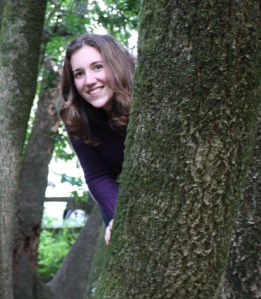
• As a wildlife enthusiast, I get excited at the thought of communicating with others who are passionate about observing and learning about wildlife. Since I’m lucky enough to interact online with people of all walks of life, I do take note of where I interact with some extraordinary people. The following are great communities to check out if you want to find me and others chatting about wildlife! (In no particular order…)

    1) Twitter – I am continually impressed by the people I meet on Twitter. If you are a person who is passionate about something, Twitter is an excellent place to find like-minded individuals. If you are interested in finding wildlife watchers on twitter there are several ways I recommend–just by searching #wildlife, #nwf or #birding you will find new people to follow. Check out wefollow.com or twellow.com and search those who include wildlife or a specific species in their profile.

    2) Wild ObsIf you’re looking to log your wildlife sightings then there are several great places for that, but if you are savvy with a phone or want to communicate their exact location–WildObs is an excellent place to go.

    While many of the users are also active on Twitter the community and the photos shared on WildObs are freaking fun to check out and I feel like I can spend hours surfing through all the sightings. Definitely worth a try if you find yourself wishing to share the watching experience with others! Follow @WildObs

    3) Wiser Earth – Aside from being a great look into the world’s conservation efforts, Wiser Earth is a community that helps bridge divides and provide meaningful resources for making the world a sustainable place. The community is full of passion and there are great wildlife resources posted throughout the site. Take a look and add a link to your favorite resource while you are at it! Follow @WiserEarth


    4) Birdpost While this site does cater very specifically toward birds I couldn’t leave it out. I am really impressed with the depth this site offers while giving bird watchers flexibility and a pleasing design to organize their life-lists and track their sightings. If you consider yourself a birder and you like technology you should definitely check out this site. It’s so fun to play with!  Follow @birdpost.


    Would love to hear what other sites are out there…
  • Today I presented at  Blackbaud’s Conference for Nonprofits about how NWF tackles branding in the online world.

    Here are just a few of my personal tips when it comes to branding anything online especially for nonprofits.

    • Empower your staff to be brand ambassadors. Teach them the branding “ropes”. When an issue arises they can decide based on the organization’s priorities whether it’s worth it to defend the brand or leave alone.
    • Consistency is key. Communicate key message points internally so that they translate well externally. NWF emails and uses yammer to share news and talking points so we can be as consistent as possible when we communicate.  We try to add the personal touch wherever possible but we try to remain consistent too.
    • Focus on what’s important: Your mission. Are people using your logos/materials in ways that align with your mission? Then, maybe think twice about scolding them if they don’t match branding guidelines. Are there ways your brand can be flexible while also being effective? Think of how.
    • Always listen way more than you talk. I’m definitely going to go over ways to listen (while tying in the wildlife theme) so for now we’ll just say that there are many many great ways to listen!

    Kelley Jarrett also wrote up a few tips from branding the session that are great to check out! It was a pleasure presenting with her. While I’m no branding expert– I’ve attached the slide from today’s presentation. One thing I will say is— “We’re nothing unless someone thinks we are something.” — and I truly believe it!

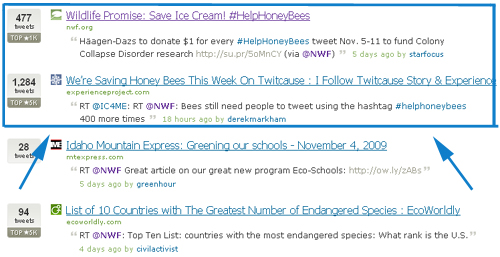
  • This week NWF’s twitter feed has been busy as a beefor the bees! All because Häagen-Dazs® teamed up with Twitcause and challenged twitter users to tweet #helphoneybees.  For a dollar a tweet –the hashtag, #helphoneybees, will benefit bee research ($1,000 dollar limit each day).  We’ve been helping them reach their goal while also spreading the word through social media sites because of the importance of research.

    Below is a neat show of how many people tweeted the link to our wildlife promise blog as well as how many people tweeted with the hashtag! Very cool to see people rallying for the bees!

    NWF on Topsy

    I especially want to thank the people who tweeted an extensive amount! And all the rest of you who helped spread the word.

  • Monarchs are MigratingMany species depend on migration because it is  imperative for their continued survival. Humans migrate, birds migrate, butterflies migrate, mammals besides humans migrate, data migrates  — it’s all so overwhelming.  While Fall migration is wrapping up at the end of this month, in my area there are still a few bird species migrating, as well as monarch butterflies — oh and not to mention NWF’s Web team. They have turned into migrating machines (migrating 4,000+ pages of our website that is!).

    Phenology has captivated me since I learned about it in school, and while migrating content may not seem relevant to nature’s time schedule and the necessary journeys some animals take during a changing season, I can’t help but see the similarities. I love that NWF is moving our content and resources to a safer place, more accessible so that it can survive and rejuvenate easier. I am excited about learning a new system or tool, and mostly I’m excited that by the next time the butterflies and birds return, NWF will have a new home for its content!

  • I love what I do for a living. Today I gave a presentation on NWF’s social media story– and about how I instruct people to use it for good!  

  • Nature is my playgroundUntil recently I’ve put off starting a personal blog because I wanted to nurture  NWF’s blog,  wildlifepromise.org. But more writing couldn’t hurt, right?

    I absolutely love both technology and wildlife and so I’m going to make this blog about both. It’s a strange combination but I’ve always wanted to be a naturalist and more and more social media is making the web seem like an unknown ecosystem.  So many new tools and species to cover. I’m looking forward to the challenge.  But in no way can I do it alone!